 |  |  |  |  |
| Astronomy and Astrophotography |

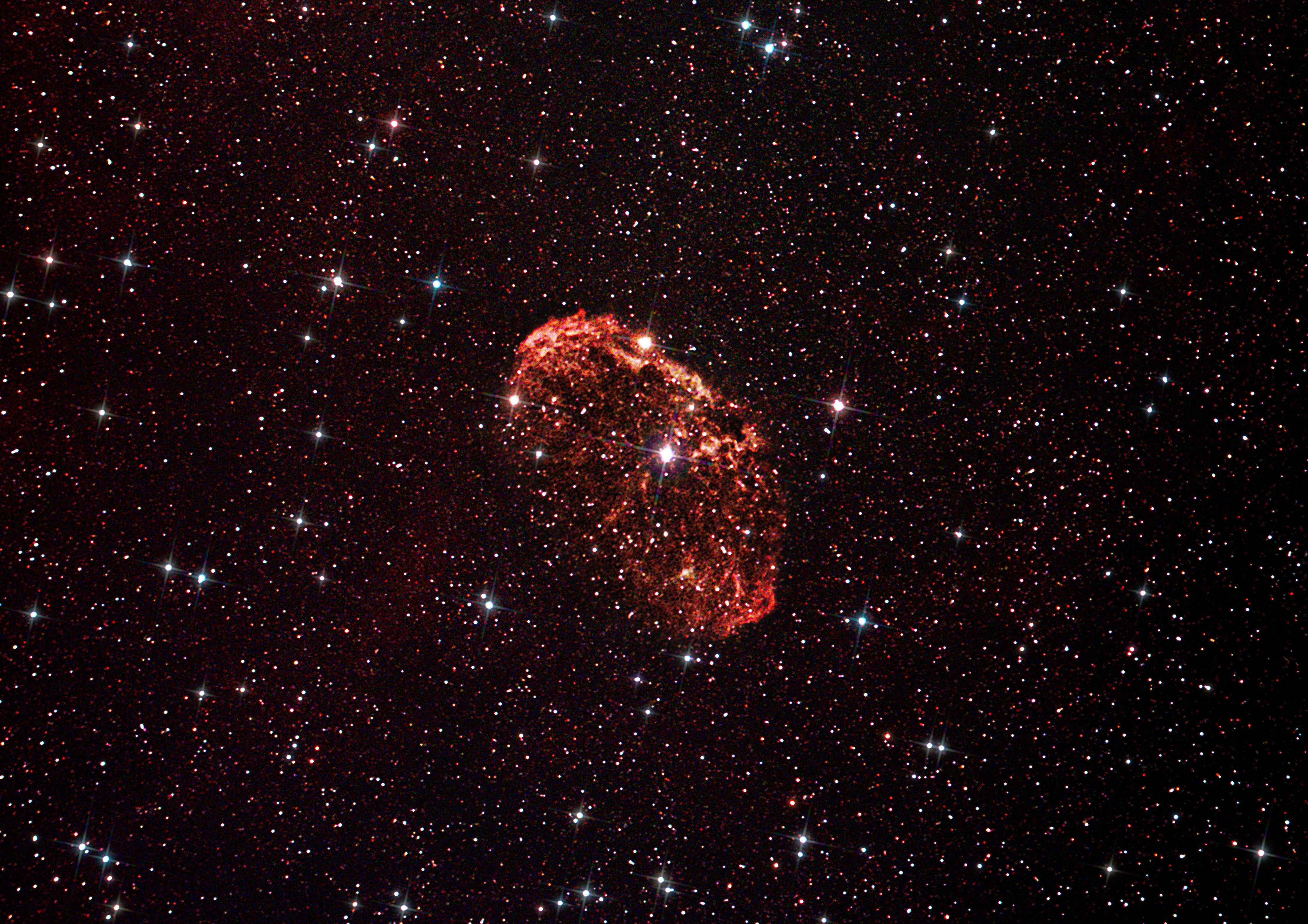
The Crescent Nebula (also known as NGC 6888, Caldwell 27, Sharpless 105) is an emission nebula in the constellation Cygnus, about 5000 light years away. It is formed by the fast stellar wind from the Wolf-Rayet star WR 136 (HD 192163) colliding with and energizing the slower moving wind ejected by the star when it became a red giant around 400,000 years ago. The result of the collision is a shell and two shock waves, one moving outward and one moving inward. The inward moving shock wave heats the stellar wind to X-ray-emitting temperatures.
|
| Capture, Guiding and Processing: Nebulosity and PHD. DSS for stacking and PS CS4 post-processing. Image details: 1 hour of 2,3 and 5 minute exposures in RGB and 38 minutes using a Ha filter. M25C CCD camera and an Explore Scientific 5" refractor. Guide camera was a Starlight Xpress Lodestar. |

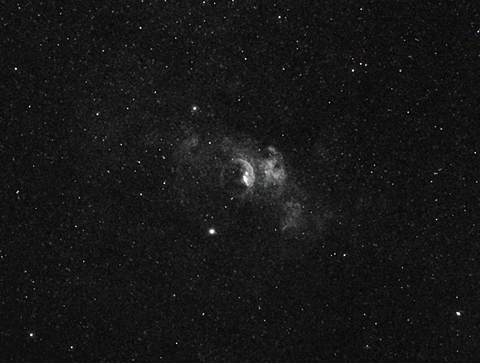
| NGC 7635 - The Bubble Nebula: NGC 7635, also called the Bubble Nebula, Sharpless 162, or Caldwell 11, is a H II region emission nebula in the constellation Cassiopeia. It lies close to the direction of the open cluster Messier 52. The "bubble" is created by the stellar wind from a massive hot, 8.7 magnitude young central star. The nebula is near a giant molecular cloud which contains the expansion of the bubble nebula while itself being excited by the hot central star, causing it to glow. It was discovered in 1787 by Friedrich Wilhelm Herschel. The star in it's center (SAO 20575 or BD+602522) is thought to have a mass of 10-40 Solar masses. Imaging and Processing: Michael DeMita - 5/30/11 - Suburban Atlanta |
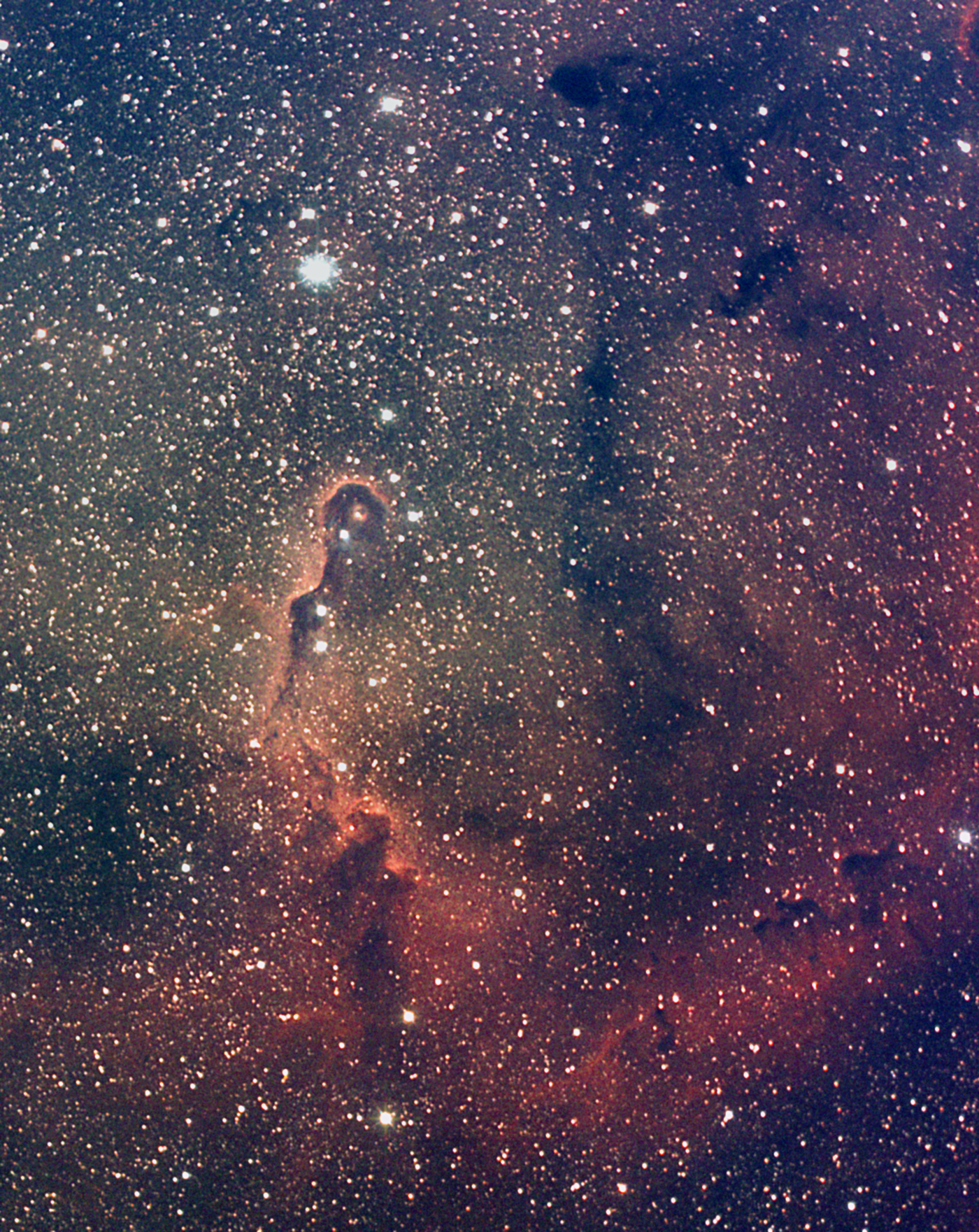
The Elephant's Trunk nebula is a concentration of interstellar gas and dust in the star cluster IC 1396 and ionized gas region located in the constellation Cepheus about 2,400 light years away from Earth.The piece of the nebula shown here is the dark, dense globule IC 1396A; it is commonly called the Elephant Trunk nebula because of its appearance at visible wavelengths, where it is a dark patch with a bright, sinuous rim. The bright rim is the surface of the dense cloud that is being illuminated and ionized by a very bright, massive star that is just to the west of IC 1396A.
A Baader UHC-S filter was used to take 2 hours of subs, each with between 1 and 5 minute exposures. A Hydrogen-alpha filter (35 nm) was used to take an additional 1 hour of luminance subframes of 5 and 10 minute exposures. Photos are presented with and without the luminance layer. This image was done from very light polluted skies in my driveway in the Atlanta area. Imaging and Processing: Michael DeMita 5/30/2011 |
| Region of Interest - The Elephant Trunk: |
| Ha Filter luminence layer. SXVR-M25C one-shot color camera. RAW conversion via Nebulosity to bin 2x2 and then up-sized 200%. Dust and Scratch feature used to accentuate the gases and minimize stars. |
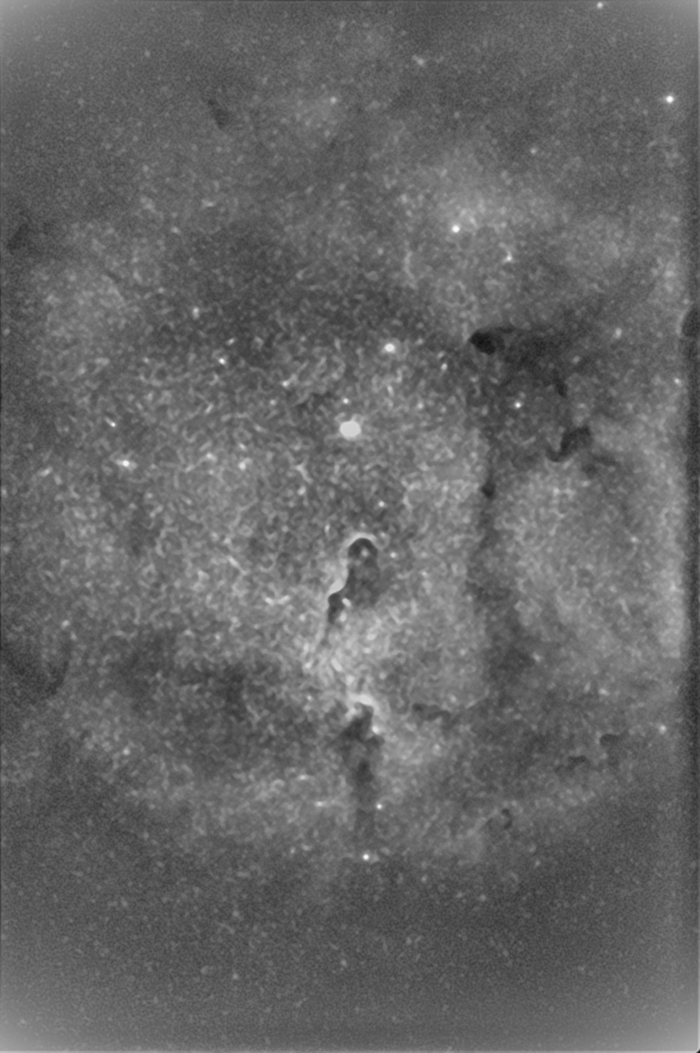
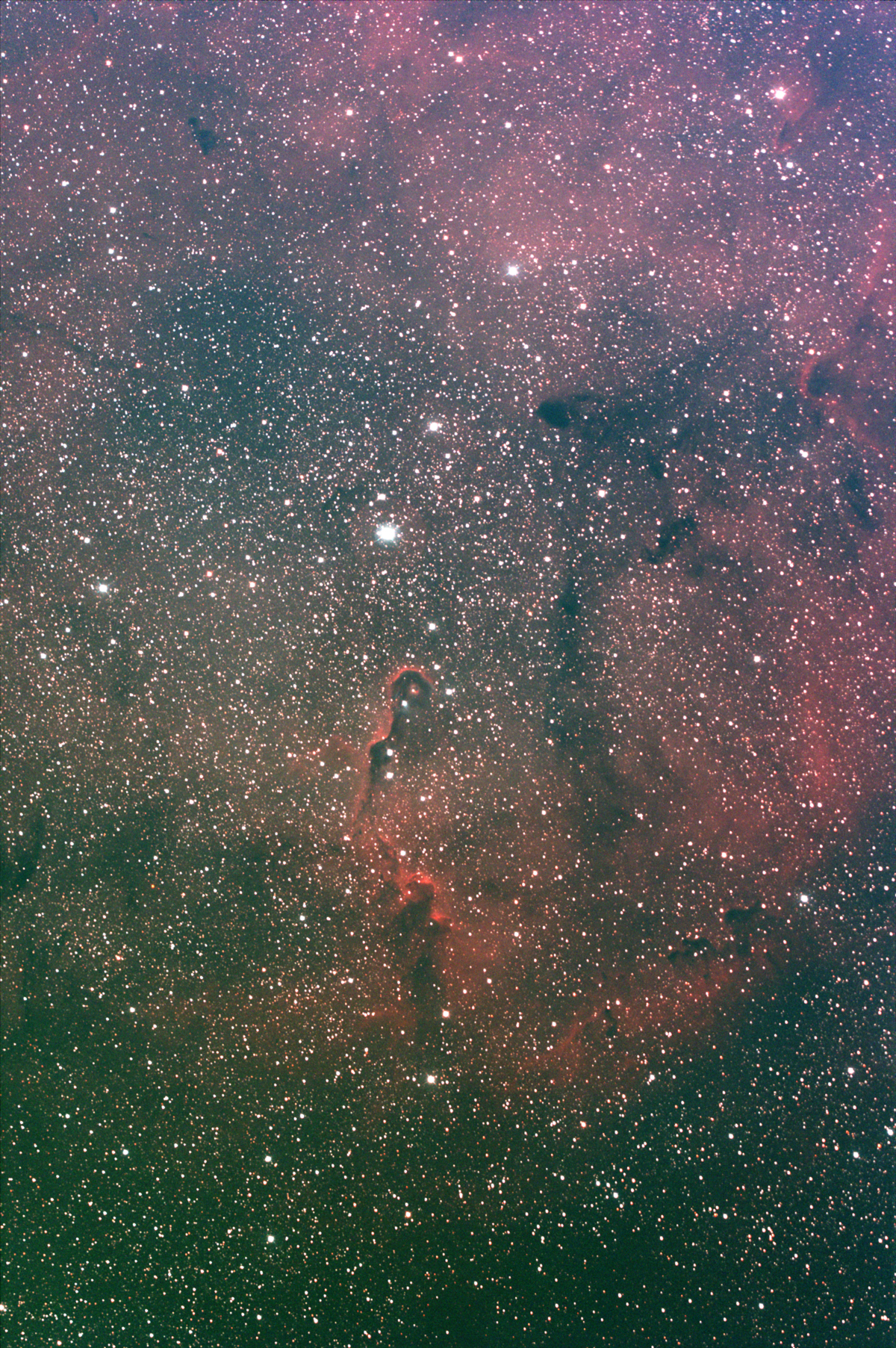
| The Elephant Trunk - UHC-S Filter: |
| The Elephant Trunk - UHC-S + Ha Filter: |
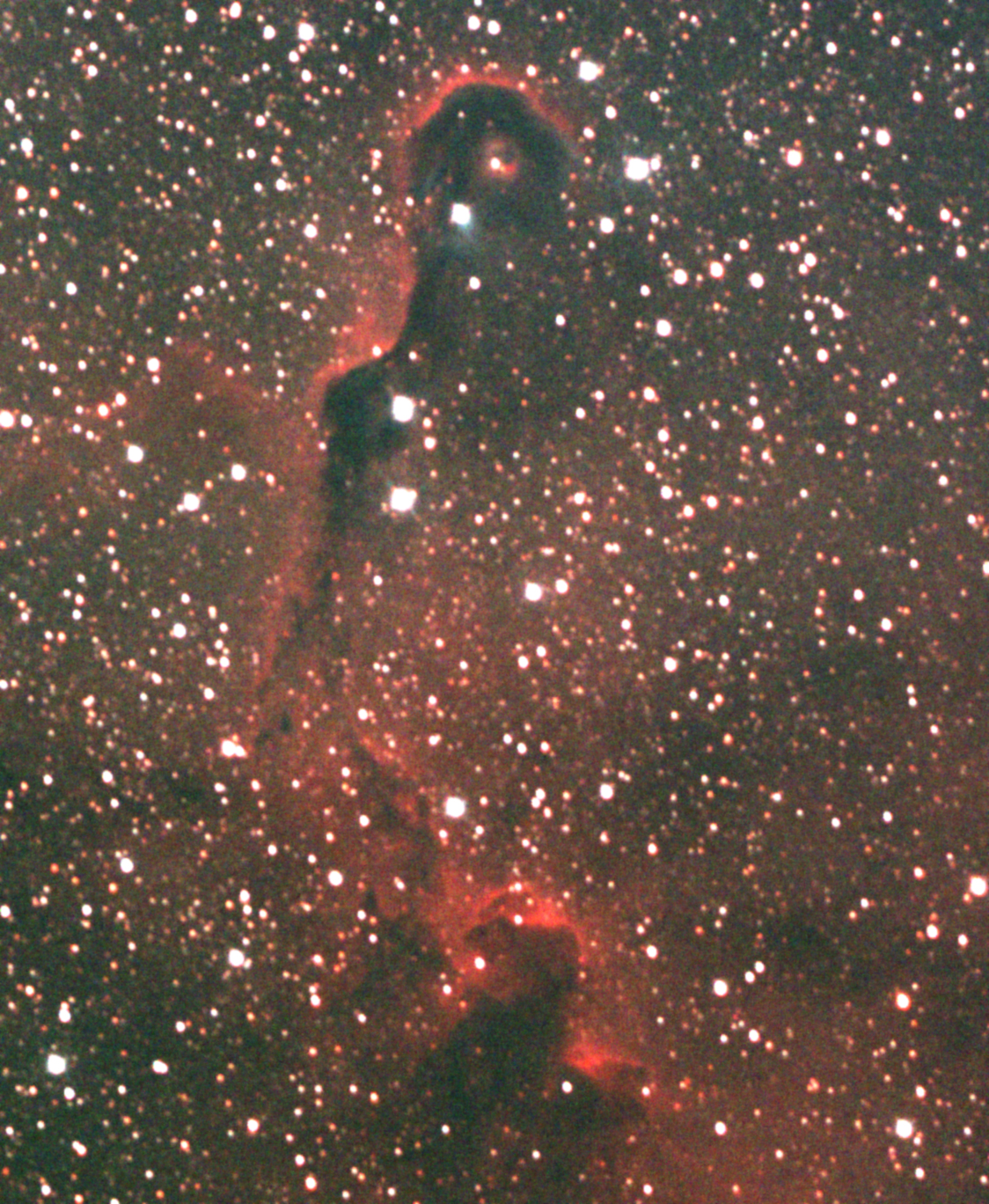
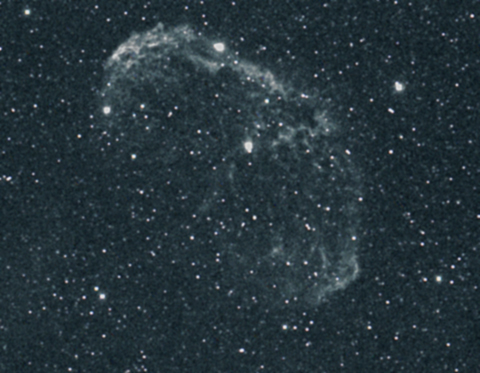
| Ha Luminance layer (38 minutes): |
| Capture, Guiding and Processing: Nebulosity and PHD. DSS for stacking and PS CS4 post-processing. Image details: 1 hour and 46 minutes of 2,3 and 5 minute exposures in RGB and 55 minutes using a Ha filter. M25C CCD camera and an Explore Scientific 5" refractor. Guide camera was a Starlight Xpress Lodestar. |
| Ha Luminance layer (38 minutes): |

| Most Recent Astrophotographic Work (Page 3): |
| I have long been interested in the this and I am now trying it. Bought my first scope on 11/1/10. The photography side of it is difficult and will take years to learn. See below for recent work and archives. |
| Click Page # below for most recent astrophotographic work - higher page # is more recent: |

